Episode 3940

Don't have the PBS App? Click Here
Episode Transcript
- [Announcer] "Tennessee Crossroads" is brought to you in part by.

- [Announcer] Some of our biggest checks have also made the biggest difference. The Tennessee Lottery, proud to have raised more than $7.5 billion for education. Now, that's some game-changing, life-changing fun.

- [Announcer] Discover Tennessee Trails and Byways where adventure, cuisine, and history come together. With 16 scenic driving trails, you can discover why Tennessee sounds perfect. Trips can be planned at tnvacation.com.

- [Announcer] Middle Tennessee State University College of Liberal Arts helps students explore the world, engage minds, enrich lives, and earn a living. More at mtsu.edu/cla.

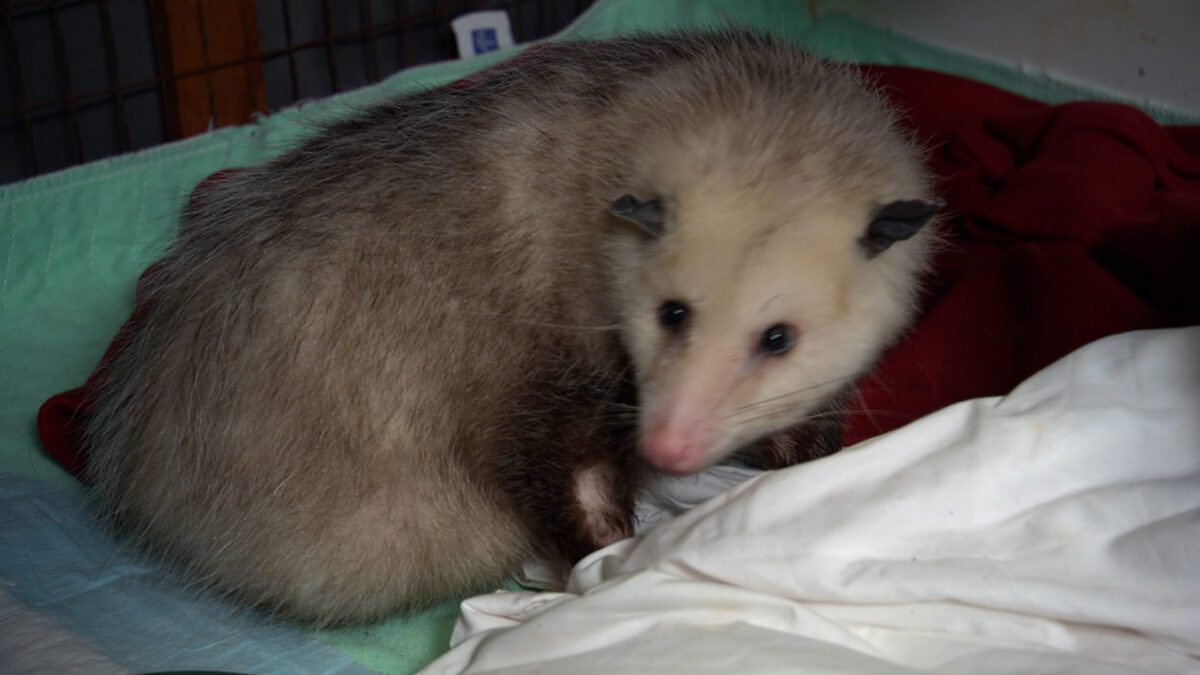
- This week on "Tennessee Crossroads," Vicki Yates gets up close and personal with some misunderstood marsupials, Joe Elmore visits one of the oldest restaurants in Nashville, Laura Faber finds a blacksmith forging iron in Franklin, and John Guider will take us to a prehistoric state park near Manchester. It's an eclectic show this time. Hey, thanks for joining us. I'm Ketch Secor, welcoming you back to "Tennessee Crossroads." Well, I'd wager to bet there are a lot of animal people in the audience. Dogs, cats, maybe horses, and even Guinea pigs. But in our first story today, Vicki Yates meets a man who's made it his life's passion to help a, let's say, less conventional critter.

- [Vicki] If you stop at this Portland Tennessee home on any given day, the first thing you might notice is that it's more than just a family's home.

- She didn't eat her oatmeal cookies.

- [Vicki] It's also a sanctuary, a surprisingly safe space for possums and squirrels. It's for wild ones. For the animals, this has been a rehabilitation center for two years, and the number one supporter and advocate is also a local radio personality. His name is Mike Eib. Mike, they're calling you Possum Mike.

- That's right.

- That's an unusual tag. How did that happen and where did it begin?

- It actually began, a guy that I worked with on the radio and he says, "Well, what's your name?" I said, "I'm Mike." He said, "You gotta have something else. What are you doing? What do you do?" And I said, "Well, I rehabilitate wildlife. You know, I'm licensed for possums and squirrels." He said, "Possum Mike." You know, it started with a couple of birds right here in this very backyard. My wife loves birds and she always has bird houses out. She mentioned that she hadn't seen very much action in that bird house right over there. So the next morning, first thing I did was I went over there and yeah, she was right. There was something got in there and attacked mama and daddy and the babies. And so I was cleaning out the bird house and in the midst, way down underneath of the nest and all the carnage was a couple of live baby birds.

- [Vicki] At first, finding help for the baby birds was difficult. But he finally found a woman who would help, even though she was a possum and squirrel rehabber. She inspired Mike to do the same after he discovered that there was no animal rehab available in all of Sumner County.

- And I started checking to see what I needed to do to be able to rehab wildlife. I had no formal education, so I had to get a minimum of 200 hours per species. You know, I just love them and my only regret doing it is I didn't get to do it sooner.

- [Vicki] Not everyone has a soft spot for these marsupials often because of their sharp features and even sharper claws.

- [Mike] Unfortunately, most people don't seem to appreciate the possum as much as I do.

- [Vicki] Why do you think that is? Because you're right. People have such a negative opinion of possums.

- Well, it's what they've learned from someone else. You know, they've heard that possums are dirty, nasty, flea-infested, tick-infested, rabies-infested animals, but nothing could be farther from the truth. My very first one was Little Darling, she's hanging from my heart there. She came to me with a litter of seven or eight. They were doing okay for a day or two, but then all of a sudden, they would start dying off. I just knew that I was gonna come down there one day and she was gonna be gone too. But she never did. She hung in there and she grew up to be a big, beautiful possum. And I even got that tattoo of her right there hanging from my heart. So I'll never forget Little Darling. She was my number one.

- [Vicki] And each animal has its own personality.

- In fact, one of my volunteers, I'm not gonna mention her name, Carrie, but she always waits. She always waits until she's had them for a while before she names them.

- [Vicki] When Carrie O'Neill isn't here at Wild Ones, she works helping people in a Portland emergency room. She became a supporter of possums after her dog killed one, leaving babies behind.

- And I'd never touched a possum until my 45th birthday. And, but I couldn't let babies die. And so I called every wildlife rehabber I could possibly find on the TWRA website, and Mike's the only one that called me back.

- [Vicki] What about the possums that brings out a motherly instinct in you?

- [Carrie] If they come to you with babies, they need you. You've got to feed them. It's like bottle feeding, but it's tube feeding.

- [Vicki] And that's something Mike is working with right now, feeding babies when their mother is no longer able to.

- When the babies are born, they're about the size of a little bumblebee. No eyes, no mouth. These guys came to us, they were about half this size. This one is Opal. She came to us about a year ago. She had been hit by a car,

- [Vicki] But for at least three tenants, the time has come to say goodbye.

- Hello?

- We'll be on our way here in a few. This is the fun part.

- [Carrie] It is not at all fun.

- [Vicki] That's because not everyone was ready to leave.

- [Mike] Yeah, let me see. Are you gonna, no.

- [Carrie] Hazelnut, ma'am.

- [Mike] All righty, we got her. She's mad. Get on in there.

- [Vicki] Like hazelnut, Coconut wasn't having it either, but Acorn was fine with the changes.

- [Mike] That was the easiest one of them bunch. A whole bunch, wasn't it?

- And then it was time to head on out to their new home. Now, it's a time of mixed blessings. That's because the possums have been taken here to the woods to be let out into the wild.

- Hey, little girl, let's go. No, I'm not crying. I used to though. It's really a bittersweet to watch this happen after all the blood, sweat, and tears that goes into getting these little babies. To this point, my job is done. She's going.

- [Vicki] She's just taking her time.

- [Mike] She said, "This is nice."

- Well, that sure gives me a new perspective on those animals, and I'll definitely slow down on those dark country roads. Thanks, Vicki. Well, next, according to a recent survey, the average lifespan of a restaurant is about five years. Most new ones closed during their first year of operation. So what does it say about a place that's been in continuous operation for nearly a century? Joe Elmore finds out the secret to the longevity of Brown's Diner.

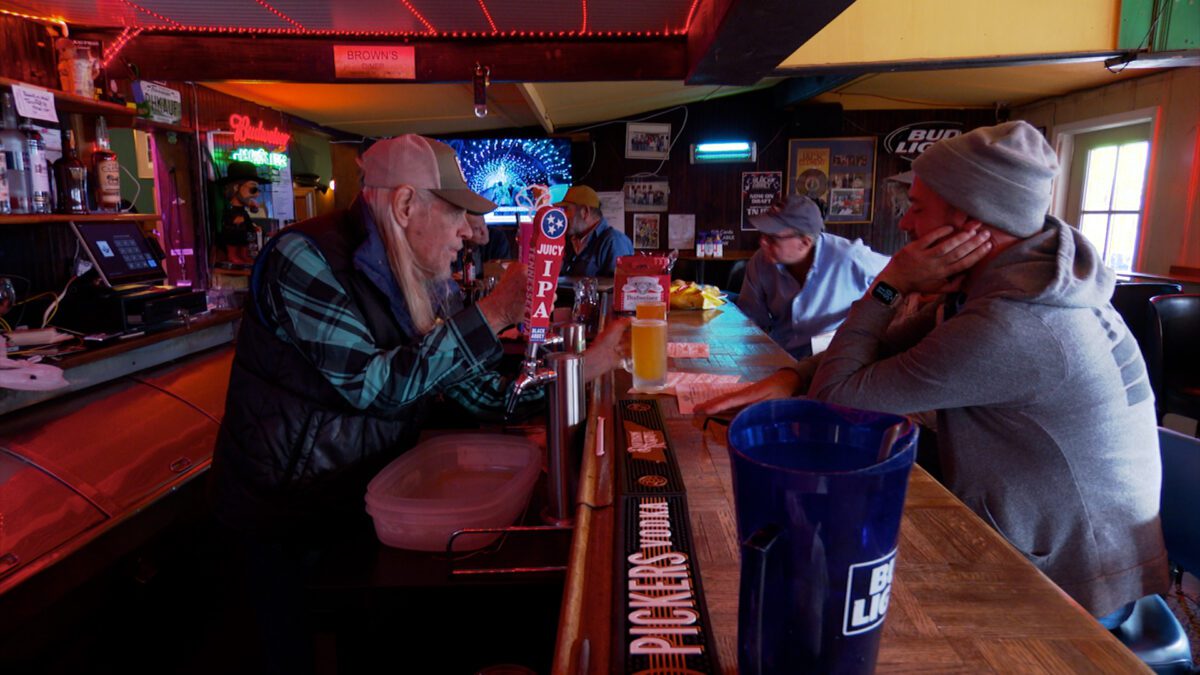
- [Joe] If you could time travel to Nashville back in the 1920s, you'd find a growing city of about 119,000 people, crossing the New Church Street Viaduct into downtown, you'd enter a busy retail and business center with cars parked on both sides of the street while shoppers navigated the sidewalks. Of course, time and transformation would change that landscape forever. If you need proof of how drastically natural it's changing, we'll just go downtown and look at all the cranes. But if you need proof of how some things never really changed, just come to Brown's Diner. It's a beer and burger landmark that's been around since 1927. That's when Charlie Brown and his wife, Oda, opened a converted mule-drawn trolley car for business. And Brown's Diner was born. Brown's has been in continuous operation for nearly a century with only three owners. Brett Tuck is number three. In 2020, a group of investors purchased the property from the previous owner who'd retired, but they needed a special someone to take over the historic diner. Brett was offered the chance to buy it.

- [Brett] And I said, "Well, it sounds fun, sounds cool, I love Brown's. How long do I have?" And he said, "Well, probably 'til tomorrow morning."

- [Joe] The place needed numerous interior renovations, but Brett, who was a long time fan of Brown's, couldn't resist the challenge.

- Next morning, called the guys and said, "I'll do it." And January 1st, 2021, they bought the land and I took over Brown's Diner. And yeah, some people are happy that I did it. Some people are not happy I did it. A lot of people think I'm an idiot, especially my wife. So...

- [Joe] Over the years, Brown's has become a favorite watering hole for famous musicians and construction workers alike. It was the home of Nashville's first beer license. So for Brett, the challenge was to make it profitable without losing its heart and soul.

- [Brett] It takes something that it's really wasn't mine. And, you know, and try to make it mine, but not change the soul. You know, there's a fine line for making it work and making it something else.

- Yeah.

- And so it's, you know, there's a lot of decisions you gotta make. There's a lot of things you have to do to really hold that soul and keep that soul going and keep that history moving forward and not cut it off and start a whole new history.

- [Joe] It looks, you know, the same as I remember always.

- [Brett] It's pretty much there. There's not much changed other than new roofs, new floors, same old bar. And then I redid the kitchen completely. It needed a hundred percent redo, so I just tore it down and put a new one up. And a lot of people ask me, "You know, did you change the flat top?" I said, "Yeah, I changed the flat top." And they're like, "Oh, that flat top is so good. It's been here forever." I was like, "No, it was bought like seven years ago. It was bottom of the line, cheap ass flat top you could get.

- [Joe] One of the main things that hasn't changed is Genie O'Brien Kimbro behind the bar. He's been pulling drafts here since the mid 1980s, swapping tails with every conceivable type of customer.

- Top notch lawyers, felons. We've had bank robbers that are regular. And they brought the money here and wanted to hide it

- [Joe] About those famous Brown's burgers, the bun supplier has changed, but the burgers, well, they're the same, just a little bigger.

- [Brett] I added about an ounce, an ounce of burger meat to the burger, just to make it a little more hefty. And that's all I've done. Same seasoning, same way we serve it. So the bun and a little bigger burger, that's it.

- [Joe] And if you have a sweet tooth after your meal, well, Brett's mom's got you covered. She brings in these beautiful cakes every day. To Brett, the real secret to ongoing success is the customer base. One that's supported Brown's continuously since the '20s.

- [Brett] I mean, it's just the people. It really is the people that work here. It's the people that kept it going. It's the local community. Most of our regulars probably are the ones, we call them unicorns. They've been in Nashville their whole lives.

- [Genie] I always said I wanted to stay there in some form or fashion until Brown turned a hundred, which won't be in about three years.

- Yeah.

- Now, I don't know. I'm sure they'd rather have a beautiful blonde back here than me.

- [Joe] And then you can hear the walls talk when you walk in occasionally. They'll tell you stories.

- People sure do love those burgers. Here's to another hundred years. Thanks, Joe. Well, in our next segment, it's a skill that started during the Bronze Age. At one point, almost everything was made by a blacksmith. Well, Laura Faber is forging ahead in our next story with a lifelong blacksmith in Franklin.

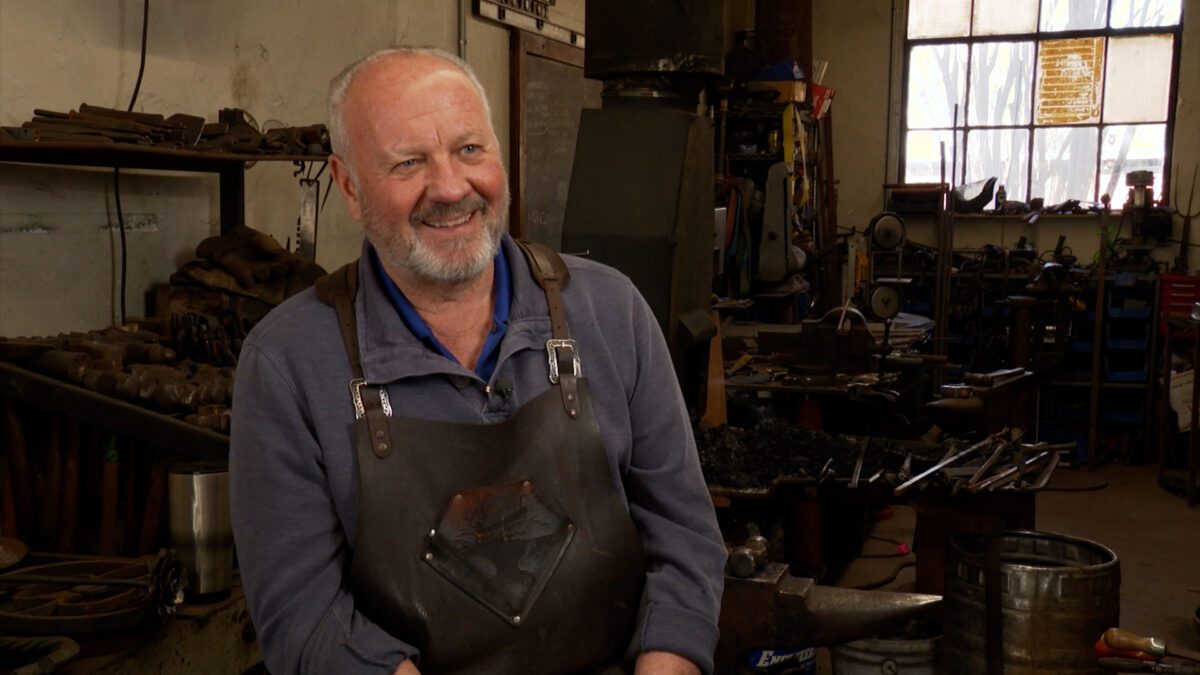
- [Laura] You can hear the work from what seems like a mile away. Metal on metal, sparks flying, flames flickering, charcoal-blackened hands. This is the life of a blacksmith.

- [Bob] We're at the Franklin Forge at the factory in historic Franklin, Tennessee.

- [Laura] Since 1976, Bob Parks has been a professional certified blacksmith and farrier and works alongside his pretty shop assistant, Ms. Keebler.

- Started out the Bronze Age and then shoeing too. You know, at one point, everything was made by the blacksmith, you know, I mean household utilities, tools, parts.

- [Laura] Bob never guessed forging would be his future. As a young man, he headed west to ski and fish and work on ranches, working odd jobs to support his lifestyle. It's when he came across a book titled "The Last of the Mountain Men," written by an MIT professor that his interest was sparked.

- What drew me to it was what all you can make. You know, everything from hinges to tools. I don't know, it's just endless what you can make. And I found the only school at the time in New Hampshire. So I went to New Hampshire and went through a colonial blacksmith school, six people there. And then when I went back to Montana, nobody really wanted colonial iron work, but I kept getting calls for shoeing as a farrier. So I went down to Montana State University, went through their shoeing program, and got involved with the associations and started competing. And I was on the US shoeing team in '88 and '90.

- [Laura] His clients with horses started asking Bob to make other things too. And he began building a more artistic career, forging commission work.

- [Bob] They'd see stuff I made and, "Oh, can you do this?" And can you do that?" Small fences, things, focal points, door hardware, pot racks, fireplace stuff is big. You know. Did a chandelier here not long ago, Actually, I do most than anything that walks in the door.

- [Laura] It takes steel and anvil, a hammer and heat to be a blacksmith. But it takes so much more than that. Years of experience to go from this to this.

- I use mild steel primarily, which some people would call wrought iron. It's not really wrought iron, but it's mild steel 836 for most everything. So I'll be working this between eight, 1800 and 2200 degrees. And you judge the temperature by the color. When this sort of sparks a little bit, that'll be 2300. And so I wanna go just, and you can forge well at that temperature. This will be just below that. And then 1550 is Austinite, the critical temperature, steel becomes non-magnetic. So I have magnets here, and that's a dull charity. And then a black heat is black, and that's where you get burnt the most. First step is to put a point on here like I'm making a nail. The hotter it is, the softer it is.

- Yeah.

- And the hotter you have it, the longer you can work it. This is a hammer I made and I have teardrop shaped handle on it. So I know if I'm on the flat or the round without looking. This is what I call my free $2 demo.

- [Laura] Here at Bob's shop at the factory in Franklin, people can watch him work. It's fascinating. Today he demonstrates how he makes a gold plated leaf used for trivets.

- [Bob] I do that all the time. And it was sort of reversed engineered. After I have all these leaves, what am I gonna do with them? You know? So I started making the trivets and then some hooks and then the candle holders. I like the animal heads and the floral things just because you don't expect to see that in metal.

- [Laura] The Klein family from Brentwood is on spring break and never knew Bob's shop was here 'til today.

- Whoa.

- He made it look so easy.

- [Visitor] I know, whoa. That's really something. Wow.

- That is so cool.

- [Laura] Jonathan and his daughter, Emma, in town from Jacksonville, Florida, are equally amazed.

- [Jonathan] The hammer did all of that?

- [Laura] Seems that what's old is new again and Bob couldn't be more grateful.

- It's so fun to meet people from all over. People that have ties to blacksmithing or I've never seen it. I love coming to work every day. It's exciting for me still to heat something up and play with fire and hit it with a hammer. What could be better?

- Looks like hard work swinging that hammer all day. Thanks, Laura. Finally, this episode, we turn it over once again to photographer John Guider and his series on Tennessee's State Parks. This time, he's going prehistoric with a visit to Old Stone Fort State Park.

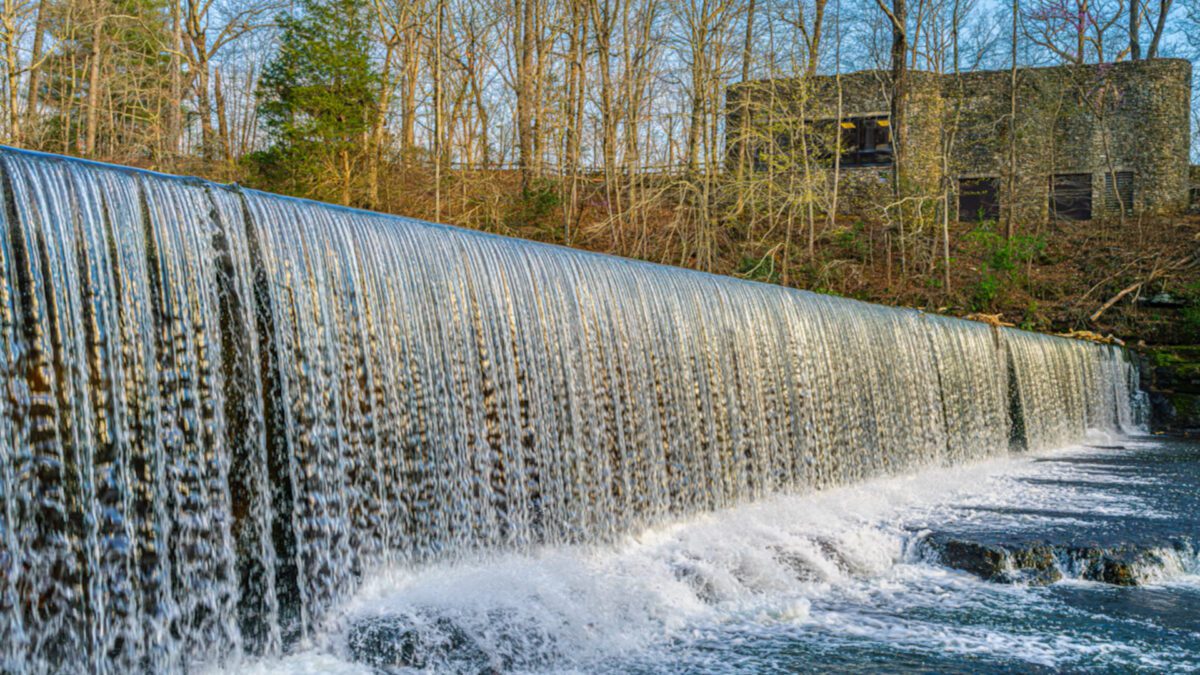
- Old Stone Fort State Archeological Park is located in Manchester, down in Coffee County. The park is about 782 acres, and the main feature of the park is what's referred to is the Old Stone Fort. It's a 2,000 year old native American mound site. Native Americans built a ceremonial site on about 50 acres in size where they came and had different ceremonies, prehistorically during the woodland time period. My name is Keith Wimberley, I'm the park manager here, and I've been a ranger and manager here for 26 years. I'm actually from here in Manchester, so I grew up here coming to Old Stone Ford and loving the site, even growing up. I started my career at the Bicentennial Capitol Mall State Park in Nashville. I was one of the original rangers when it opened there in 1996, and then was there for exactly four years and then got to come home here in 2000 after the longtime ranger retired. Manchester, Tennessee is named after Manchester, England, which is known for its abundant industry. And when they named this town that, they hoped that it would replicate that. And there was a whole mill town within the enclosure with several different houses and a commissary and a hotel. And there were several different mills, two or three different paper mill, a rope factory, and even an oil well. And then there was also a powder mill for the Confederacy during the Civil War. But one of the paper mills here is actually made of old rags or old clothes. And the old rags were turned into newspaper. And that one mill provided all the newspaper for Nashville, Chattanooga, Atlanta, and Memphis. It was a major, major industry. Old Stone Fort State Archeological Park was established in 1966. The owners of the mills, which closed in the late 1800s, kind of tried to use the area as a tourist draw, tourist destination. And some of the early folks in Manchester actually worked to try to get it made into a national park. And after that fell through, a lot of the local historians got together and had it established as a state park under Governor Clement. The park is relatively small, I guess you'd say, but there's a lot packed into it. We have a museum that talks about all the pre-history of the site and a little bit about the historic activity, but talks about the old Stone fort and how it was built. We also have a 50 site campground with a shower house, water and electric on each site. And the campground is very popular in the summertime. Basically, anywhere from March to October. It's full every weekend. So I highly recommend people to go online and get reservations well ahead of time, but a very, very nice campground. Shower house is only about five years old and the electric was upgraded about at that same time. And then we have a nice picnic area with about 30 picnic tables with restrooms and a picnic shelter that you can rent. And then also a playground. And we have about 10 miles of trails on the park. And there's one designated that you can ride mountain bikes on as well. The old Snow Ford is situated between the duck and little duck rivers, but the two rivers are very beautiful and they both have waterfalls on them. The Duck River starts here just off the park a little bit and closed about 284 miles to the Tennessee River in West Tennessee. It's the longest river, totally contained in the state, and it's been recognized by National Geographic as one of the five most biodiverse rivers in the world. Experts in the field have referred to this site as the most spectacular woodland period site that there is. If you come here, definitely recommend that you do the 1.4 mile enclosure trail around the Native American enclosure. And it also takes you along both rivers where you see all the rivers. We also have a 12 interpretive signs around that trail, telling you all about the site as well. I would say my favorite time would be the springtime. This time of year when all the trees are blooming and the wildflowers are coming out, we have a spectacular array of wildflowers. I just love this whole park. It is an honor and a privilege to be able to lead the protection of this site with the Old Stone Fort. Again, it's a 2,000 year old mound site and you don't see it very often. It's an honor to be able to protect it and you know, encourage people to respect it and understand it and educate them about it. So they want to protect it for future generations.

- Beautiful images. Thanks, John, and thank you all for joining us again. We always appreciate you. We also appreciate you going to our website, tennesseecrossroads.org. Be sure to find us on the PBS app and we'll see you right back here next time.

- [Announcer] "Tennessee Crossroads" is brought to you in part by.

- [Announcer] Students across Tennessee have benefited from over seven and a half billion dollars we've raised for education, providing more than two million scholarships and grants. The Tennessee Lottery, game-changing, life-changing fun.

- [Announcer] Discover Tennessee trails and byways where adventure, cuisine, and history come together. With 16 scenic driving trails, you can discover why Tennessee sounds perfect. Trips can be planned at tnvacation.com.
Tennessee Crossroads
June 25, 2026
Season 39 | Episode 40
THIS WEEK ON TENNESSEE CROSSROADS, VICKI YATES GETS UP CLOSE AND PERSONAL WITH SOME MISUNDERSTOOD MARSUPIALS. JOE ELMORE VISITS ONE OF THE OLDEST RESTAURANTS IN NASHVILLE. LAURA FABER FINDS A BLACKSMITH FORGING IRON IN FRANKLIN. AND JOHN GUIDER WILL TAKE US TO A PREHISTORIC STATE PARK NEAR MANCHESTER.