Episode 3921

Don't have the PBS App? Click Here
Episode Transcript
- [Announcer 1] "Tennessee Crossroads" is brought to you in part by.

- [Announcer 2] Some of our biggest checks have also made the biggest difference. The Tennessee Lottery, proud to have raised more than $7.5 billion for education. Now that's some game-changing, life-changing fun.

- [Announcer 3] Discover Tennessee Trails & Byways where adventure, cuisine, and history come together. With 16 scenic driving trails, you can discover why Tennessee sounds perfect. Trips can be planned at TNTrailsAndByways.com.

- [Announcer 4] Middle Tennessee State University College of Liberal Arts helps students explore the world, engage minds, enrich lives, and earn a living. More at mtsu.edu/cla.

- This time on "Tennessee Crossroads," we meet a talented guitar maker in Fairview, taste some of the best Thai food around, take a meaningful tour through downtown Nashville, and get a little spicy at an authentic Cajun restaurant in Goodlettsville. Hi everyone, I'm Ketch Secor welcoming you to "Tennessee Crossroads." Well, if you've lived in Tennessee any amount of time like I have, you've probably heard the term luthier. A luthier is a master craftsman who keeps the music playing in Music City. Well, in our first story, Miranda Cohen introduces us to a talented man in Fairview who's got a gift for guitars.

- [Miranda] In the hands of talented musician Tim Creek, this custom-made guitar seems to have its own story to tell. The melodies, the chords, those rich licks that blend together so beautifully, they are the perfect harmony between the player and the instrument. The guitar takes years to master. It also takes years to master the delicate and meticulous art of creating and maintaining these beautiful instruments.

- [Dan] All right.

- [Miranda] Meet Dan Blom, he is a trained luthier. A luthier is someone who is skilled in the art of building and repairing stringed instruments. Dan and his wife Cindy, have owned Blom Guitars since 1995. For more than three decades, artists in the know know exactly where to take the tools of their trade to keep them in pristine condition.

- When I went to school to become a luthier, the only thing they didn't teach me what to do was how to cut the tree down.

- [Miranda] Dan is a native of Minnesota, the son of a master jeweler and watchmaker. After graduating from a prestigious stringed instrument program, naturally his career path led to Music City. He began his career working at legendary Gruhn Guitars back in 1991, learning alongside some of the very best craftsmen in the industry.

- It was just the getting to do the work and doing the different repairs that are needed, and then also learning about how to deal with vintage, rare, valuable instruments. I saw more stuff in four and a half years than most guys will ever see in a lifetime,

- [Miranda] Although they do build and restore, today, Dan and Cindy focus mainly on repairing and reviving these stunning instruments in their shop in Fairview. Everything from a basic setup to the most complex repairs on acoustic and electric guitars, mandolins, and even mountain dulcimers. He will sand, polish, glue, and string each piece by hand with great attention to every detail.

- [Dan] For repairs, unless you're building this very guitar, you gotta do this all by hand. But yeah, spend a little more time with it, I'll have it down. This is the hardest spot right here, is to get this bend right here. It's a piece of wood, it's organic. Not every piece of wood moves the same way, not every piece glues up the same way. It is just a constant learning experience on how to do your very best that you can all the time. All right.

- When it comes to guitars, Dan swears he doesn't have favorites, but there are some that are very special to him just like this one. This beautiful wood came from an old barn, the control plate, well, that's door hardware. And then the switch, that's a clock gear as an ode to his dad. Dan says his greatest reward is hearing the sweet music that has been locked inside a long forgotten piece, or a family heirloom, whether it is in the hands of a beginner or on a grand stage.

- It's not just about loving to play, it's about a particular instrument that they've had that just speaks to them and makes them feel, "I'm a better player when I'm playing this guitar. This is the one that inspires me." There's been so many stories that I've heard in this little shop, and I've heard a lot of heartbreaking stuff too. You know, there's been a lot of tears shed here too.

- [Miranda] And Dan and his wife turn to their work that requires so much patience and attention as a form of healing, after the unimaginable loss of their only son, Erik in 2014. Inspired by Erik's talent and artistry, Dan and Cindy poured their creativity into a line of electric guitars.

- Erik had this profile of him with a mohawk, and I said, "That reminds me of a comb on a rooster's head." And I just, we were just, I said, "Why don't we just call 'em EB Rooster?" EB for him, Erik Blom.

- [Miranda] All of these stunning EB Rooster guitars are ready for professional play. And as a way of honoring Erik's memory, every sale benefits kids at risk. Dan Blom has spent a lifetime doing what he loves, mentored by his father, inspired by his son, and motivated by words from his brother.

- He said, "You're a steward of string instruments." And so, that kind of gave me the strength to knock down the fear thing and just go for it.

- [Miranda] And the stewardship will continue. Dan Blom is keeping the music playing one chord at a time.

- [Dan] All right.

- Now, if you drive by Tennessee Tech University during lunch, go Golden Eagles, you'll likely see a crowd lined up outside a small house, but you won't find a frat party inside, what you will find is some of the best Thai food you ever tasted. Laura Faber took a trip to Cookeville to see what all the buzz is about.

- [Laura] It's lunchtime in Cookeville and there is a line outside Ocha Restaurant. At 11:00 AM sharp, the doors are unlocked, and for the next three hours, there is a steady stream of people coming in for a heaping helping of Thai food.

- Ocha Restaurant, we opened here in 1985. We serve Thai food right in the middle of Tennessee Tech, and the hospital, and the courthouse and everything. We actually 11:00 until 2:00 all week, and then Thursday and Friday we reopen in the afternoons from 4:30 until 7:00.

- [Laura] Dan here manages Ocha and is part of the family that has owned and operated this restaurant since it opened.

- [Dan] Spicy chicken and the egg rolls are by far the most popular.

- [Laura] What's your favorite thing here?

- [Dan] The spicy chicken and rice, for sure. I would probably, I'd probably be a number one customer myself if I didn't work here, I guess. I've been eating it for probably 25 years. It's pretty good.

- [Laura] Dan's uncle, Vich Keeradarome, has worked here since the beginning. So are the recipes written down anywhere?

- Over here.

- [Laura] Everything is fresh and homemade. Even the sauces, soy, plum, and the hot sauce.

- Egg roll, we make a lot every day fresh. Oh, this is a stir fry noodle. Delicious.

- [Laura] Even Dan's mom helps with the family recipes.

- It's my pleasure to make, people like it, the food, you know, good food, fresh food, and, you know, and the recipes my family created, so I want to keep it, good stuff for the customer to keep coming and coming. Here you go, Dan.

- [Laura] Whether it's the noodles or the rice, the spicy chicken or the spicy beef, the beef and broccoli, the cream cheese wontons, or yes, those egg rolls, people can't get enough of these family recipes.

- It's very good. Very good. And I can't tell that it's changed from day one. Well, egg rolls, definitely, a mix of the noodles and rice. And of course, I'm partial to spicy chicken.

- Vich and his family came to New York from Thailand years ago. His brother working as a chef in famous places like Tavern On the Green. Vich was a mechanical engineer and worked at BMW for years. His sister was a nurse. All that changed on a trip to Tennessee. The story of Ocha's Restaurant starts in the mid-'80s when Dan and Kay, that's Vich's brother and sister, were driving through Cookeville, saw this building and the rest is history.

- [Dan] This was originally a house, like a duplex, and they converted and changed everything, you know, to the restaurant.

- They start doing this, and then they need help, we come follow, yeah, to help him over here. We're all family helping each other. I rather doing restaurant business better, no boss. I am my own boss. Most customers, so friendly. I mean, almost know each other by heart. You know, I love this town, really. I mean, whenever I go shopping, everybody, I mean, I met there. They're so, so beautiful. They're so friendly. I mean, not like big city like New York, ooh!

- [Laura] It certainly feels like one big family inside Ocha, a place where Vich knows your name, your kids' names, and your order by heart.

- [Vich] You want some gravy?

- [Dan] Yeah, he's got everybody down pat. He usually remembers, you know, asks about brothers and sisters and moms and dads. And he knows most everybody by name.

- [Vich] Most of the customer is just regular customer. That's what I know.

- [Laura] The family travels back to Thailand every summer for a family reunion, and Ocha shuts down. But customers always come back and stand in line the minute they reopen in the fall. Vich and his family are doing something right.

- I was blessed, you know, to have this, you know, lucky, you know, to be, you know, in this town and with all the customer that we have, I love them. I love them very much. That's the only thing I can say. Thank you.

- Well, after all that delicious food, maybe a walk would do us some good. How about a walking tour of Nashville? Danielle Allen took a special trek through Music City a few years back, not to catch glimpses of country artists, but in search of activists who changed our country for the better.

- [Danielle] The fight for civil rights echoed through the South in the 1960s, and it was heard loud and clear in Nashville. Those stories of trials and triumphs are retold in books and documentaries.

- All right, let's rock and roll, guys.

- [Danielle] But there's something about physically walking down the path of history, and that's where United Street Tours come in.

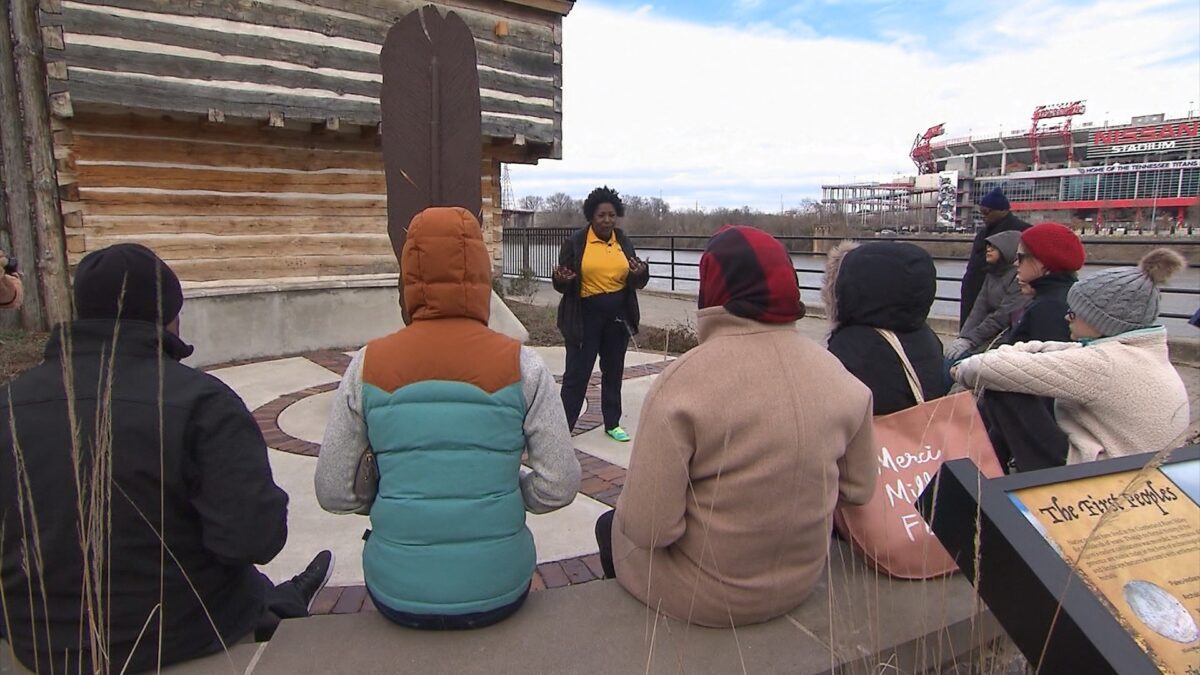
- All right, I'm gonna talk about this statue. I'll stand in the mud so you won't have to.

- [Danielle] Chakita Patterson is the founder of United Street Tours. Her mission is simple, educate through storytelling.

- [Tourist] They looked around.

- And they saw that no one was guarding the gate, so they went inside. The thing that makes a good story is having one character and telling the life of that character, the ups and the downs, right? And because all of our stories don't necessarily have happy endings, it's very, very important for us to take you on a journey to how it got that way. Feel free to have a seat, guys.

- Come on, guys.

- I'm gonna talk right from here.

- [Danielle] We took a journey with Chakita on her African American Culture Tour. She talked about people and events from the 1700s all the way to the 1960s. She also does a tour for civil rights and a Nashville Black Wall Street Tour. Each one of these is different, but they all serve the same purpose.

- [Chakita] The purpose of the tours is to unite people, right? So, oftentimes, when people hear Black history, it's "Oh, that history." But really, Black history is America's history, right? So United just came from this whole idea of telling Black history to provide a unified America, and not just singling Black history out and saying, "This is your history, this is my history." But when we embrace all history, then we have a holistic and a well-rounded view.

- [Danielle] The idea for United Street Tours came about when Chakita was a dean at a local school. She was helping students do a Black history project, but there was one small problem.

- I was very, very excited to get the students involved in planning Black history, taking charge of what the theme was going to be for Black History Month. So just went around, talked to students, interviewed them, and everyone was excited to plan, to get on board. But what I started to realize is that they didn't know much about Nashville's Black history or about Black history stories to plan anything outside of Dr. Martin Luther King Jr. Right? So Dr. Martin Luther King Jr., a lot of us learn about him in school, but outside of that, they haven't been exposed to a wide variety of Black history stories.

- [Danielle] That experience gave Chakita an idea. Why not start a business that'll make those little known stories well known? One that lets you take a closeup look at the past. And from there, United Street Tours was born.

- [Chakita] Before starting this, I spent a ton of time researching, searching the internet, reading tons of books, and just trying to pull out information that I thought would connect with people. So after I don't know how many hours of research, right? Something was missing for me. It's a lot of stuff that wasn't adding up. So what I started doing was reaching out to local history professors at colleges here, and I just started talking to people, just engaging in conversation. Tell me your perspective on this story. Okay, this is what I read, what do you think? So just talking to different professors gave me additional perspective to go by.

- [Danielle] In addition to giving different perspectives, there's another perk to this tour, one that only comes with a little bit of walking.

- So just gives people time that you don't necessarily have when you're on the bus. And it also, it's more personable because I have an opportunity to stop and say, "Oh yeah, and look at this," right? So we are not passing things really fast, and people notice stuff all the time on the tour. They say, "What does this mean? Can you talk to me a little bit about that?" Those are things that can only happen on a walking tour because you're going at a slower pace, and then more personable. I want to point this one out to you.

- [Danielle] The tours cover stories you don't often hear, like Robert Black Bob Renfro. He was a quasi-independent slave who owned a popular bar, but it also revisits the stories you'll never forget. Diane Nash confronting the mayor on the steps of the courthouse, and the sit-ins at Woolworth on 5th.

- [Chakita] Our last stop on the tour is at Woolworth on 5th, and at Woolworth on 5th, they get an opportunity to sit at the stools and sit there and reflect and think about what they learned and things like that.

- [Danielle] You'll also hear firsthand accounts of those sit-ins and the bravery it took to pull it off.

- John Lewis said he sat upstairs with a few of his colleagues, and as he was sitting here, he could hear the sounds of his colleagues downstairs being beat up. Can you imagine? So he got up and just like we walked up those steps, he immediately began to walk down those stairs. And when he got down there, all the non-violence resistance training that he had kicked in.

- [Danielle] Every day, Chakita takes a new group on tour, going up and down the streets of downtown Nashville and sharing stories from Black history. She hopes walking down memory lane will pave a better road to the future.

- [Chakita] There is a lot of people that have difficulty having cross-cultural conversations, making cross-cultural connections, right? But when you can learn about your history or about the history of others, that kind of grounds you in this space of this is what happened. What can I do about that to ensure that the future is this way or that way? So ultimately, I hope that the tour serves as an educational tool to expand the minds of others.

- Great story, Danielle. Thanks. Well, finally on our show today, finding authentic Cajun cooking doesn't require a trip to the Louisiana Bayou. You can get it right here in Middle Tennessee if you know where to look. A Goodlettsville chef turned his passion for Cajun food into a gym of a restaurant, and it's the real deal.

- [Mike] Sometimes coming around a curve may not see us the first time, might have to see us on the way back.

- [Joe] And it's worth the effort. It's a little restaurant off Springfield Highway called Lagniappe Bayou Kitchen. If you're craving authentic Cajun cooking, well, this is the place. And owner Mike Crabtree is the man who makes it happen. Mike honed his Cajun culinary skills while working as a traveling chef for a company called Aramark.

- So that was fun. I got my first experience of true Cajun cuisine down there, and the difference between Cajun and Creole cuisine, which was very, very different. Creole cuisine is more of like refined, I would say more like French cooking, and then your Cajun cuisine is more of your low country, you know, what we consider country cooking in Tennessee. You cook what you got around you and make something good out of it. Right now, we do traditional New Orleans style counter service where folks get to come in the door, we greet 'em, give 'em a menu, and let 'em come up to the counter to order. And then from there we bring the food out and take care of 'em till they head on out for the day.

- [Joe] Making a choice can be challenging. The menu includes the whole gamut of bayou favorites, from etouffee to gumbo, and even a few of Mike's own recipes. Most ingredients are carefully sourced from Louisiana and the Gulf Coast.

- We actually bring in traditional Leidenheimer bread. Leidenheimer Bakery's been in New Orleans, God, for a long time, but it is the traditional authentic bread that you want to use for making a po' boy. It's gonna, it has a different mouth feel, different taste, different texture than just your traditional French bread.

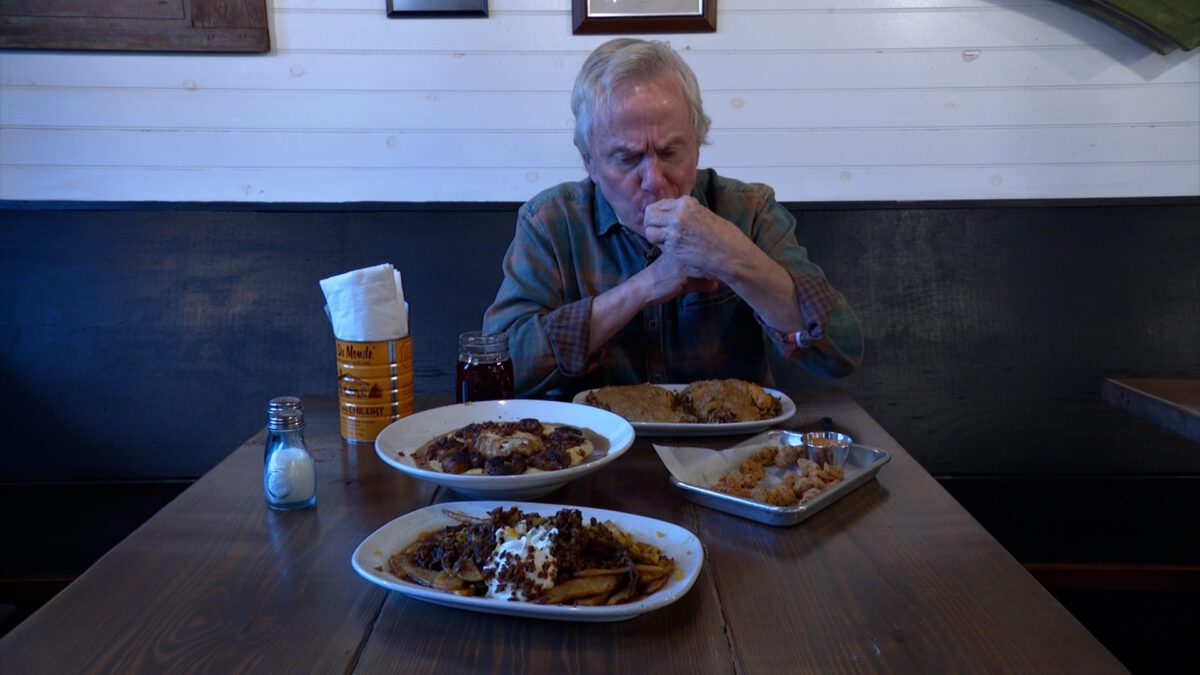
- [Joe] One of the favorite appetizers is debris fries. Mike's signature fries topped with cheese, then roast beef and debris gravy, a scoop of sour cream, and finally, some bacon. Lagniappe's catfish is award-winning and Mike puts his on a bed of dirty rice, tops it with crawfish etouffee and calls it catfish jambalaya. What is the secret to to cooking something like etouffee or, you know, gumbo and things like that?

- Low and slow. And quite honestly, you're starting with the roux. The roux is what takes you the longest, and the roux is probably the most important thing to it all.

- [Joe] There are several versions of shrimp and grits. I was especially taken by one called Kiss My Grits and Tell Me You Love Me.

- [Mike] Cajun style pimento cheese, and then a little bit of cream.

- [Joe] Then Mike tops that with a fried grit cake before adding about seven blackened shrimp. He surrounds it with remoulade sauce and of course, a little bacon. Many of Mike's customers are regulars and already fans of Cajun cuisine.

- All right, anything else I can get for you?

- I don't think so.

- All right, y'all enjoy.

- [Customer In Blue Shirt] Thank you.

- [Mike] We'll have folks bring in their friends that maybe haven't tried Cajun before, and they'll be like, "You have to try this." We will give 'em like a little sampler of the gumbo and the red beans and stuff so they can kinda get an idea of what they would like. And if they don't care for Cajun, then we've also got our American Wagyu burgers that we do, which are locally sourced an hour from here in Celina, Kentucky with Black Hawk Farms.

- You know, part of the fun of eating out is the adventure, you know, trying something new. Well, nothing fits the bill like this, Louisiana gator, better known as swamp chicken. Tastes kike chicken.

- [Mike] It's usually the gator or the frog legs that they'll try. But it's kind of funny 'cause both of those taste very similar to chicken. One will eat like a breast, but it'll bite like a thigh. The other will eat like a thigh, but bite like a breast.

- You'd think Mike would have his hands full serving as manager and chief chef, but he frequently wears yet another hat.

- [Mike] My wife likes to tease me that I opened a bakery when I took over Lagniappe because I do all the cakes and pastries. Always have creme brulee. We always have banana pudding, and we've always got beignets that we do fresh out of the bag. But we'll have other types of cakes. Like today, we've got a German chocolate up there mixed with pecan cake. We've got an orange dreamsicle cake that we made from scratch there, and we've even got our play on a Boston cream pie, but it's a Boston cream cake.

- [Joe] Ah, but wait, there's more. Mike even adds his talents to some of the items in the gift shop.

- [Mike] I do some woodwork and stuff, mainly for family and friends right now, but the goal is to sell more of it down the road too, so I just can't sit still.

- [Joe] Well, that's obvious, but when you love what you're doing, it's more of a passion than hard work. And the real payoff is meeting and pleasing the customers who pass through your doors.

- If I'm not stuck on the stove cooking for that shift, then I'll make it a point to go to each table to try to say hi and, you know, answer any questions folks may have. So that's part of the fun for me, getting to meet the new folks that come in.

- Well, folks, that's all the time we have for today, but be sure to check out our website, tennesseecrossroads.org to watch all your favorite segments. Plus join us back here next time, and thanks for watching.

- [Announcer 1] "Tennessee Crossroads" is brought to you in part by.

- [Announcer 2] Students across Tennessee have benefited from over $7.5 billion we've raised for education, providing more than two million scholarships and grants. The Tennessee Lottery, game-changing, life-changing fun.

- [Announcer 3] Discover Tennessee Trails & Byways where adventure, cuisine, and history come together. With 16 scenic driving trails, you can discover why Tennessee sounds perfect. Trips can be planned at TNTrailsAndByways.com.
Tennessee Crossroads
January 01, 2026
Season 39 | Episode 21
Miranda Cohen meets a talented guitar maker in Fairview, Laura Faber tries some of the best Thai food around, Danielle Allen takes a meaningful tour through downtown Nashville, and Joe Elmore gets a little spicy at an authentic Cajun restaurant in Goodlettsville.