Episode 4013

Don't have the PBS App? Click Here
Episode Transcript
- [Narrator] "Tennessee Crossroads" is brought to you in part by.

- [Narrator] The Tennessee Lottery has proudly provided funding for education programs throughout the state. The HOPE Scholarship, as well as technical school grants and more, have received over $8 billion in funding. The Tennessee Lottery, game-changing, life-changing fun.

- [Narrator] Discover Tennessee Trails & Byways, where adventure, cuisine, and history come together. With 16 scenic driving trails, you can discover why Tennessee sounds perfect. Trips can be planned at tnvacation.com.

- [Narrator] Middle Tennessee State University College of Liberal Arts helps students explore the world, engage minds, enrich lives, and earn a living. More at mtsu.edu/cla.

- [Ketch] This week on Tennessee Crossroads, Vicki Yates finds home cooking in Indian Mound. Miranda Cohen takes us on the hunt for ghosts at the Hermitage, John Guider visits Cedars of Lebanon State Park, and Al Voecks gives us a look back into the past at Miller's Grocery. Howdy, everyone, I'm Ketch Secor. Thanks for joining me on another trip across the state on "Tennessee Crossroads." Now, when it comes to restaurant names, we've seen them all, from the creative to the absurd. But in our first story, Vicki Yates found a restaurant in Indian Mound that chooses to keep it just about as simple as you can get.

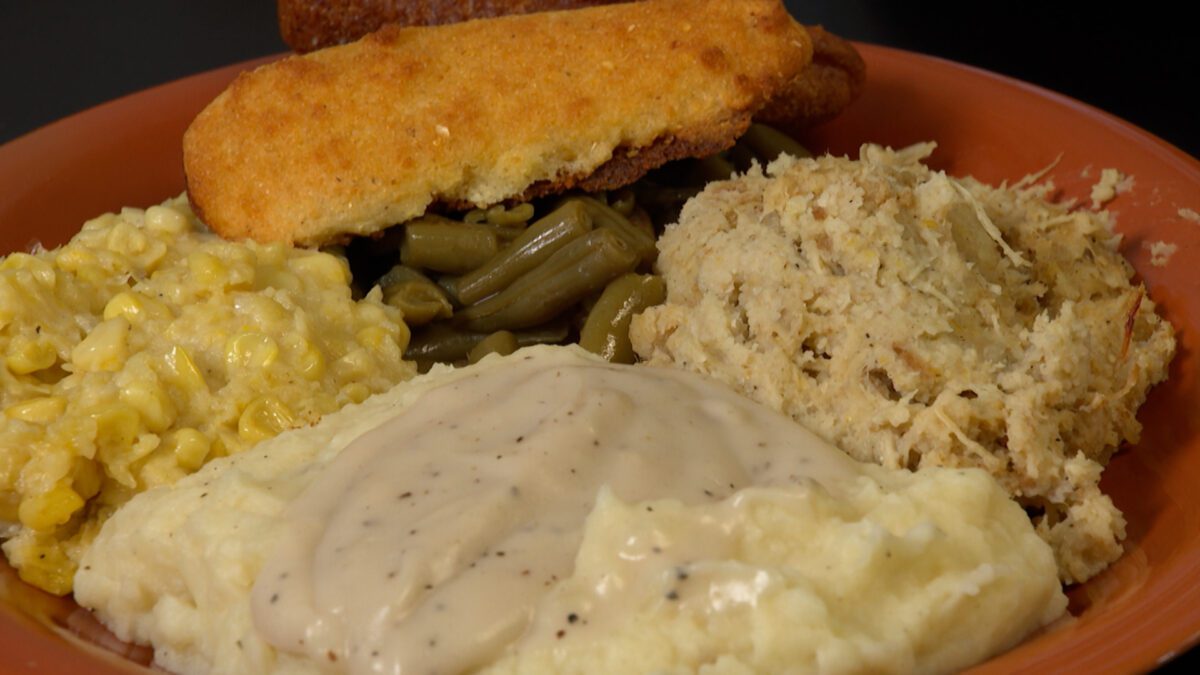
- [Vicki] US Route 79 in Tennessee runs from the Arkansas state line near Memphis to the Kentucky border near Clarksville. Not exactly a quick hop, skip, and a jump, but the effort is certainly worth it if you like great home cooking. Welcome to 79 The Restaurant. This table here. Located on Highway 79, people come early to grab a seat and get a bite to eat. Right now, it's breakfast time here in Indian Mound, and what's on the menu? How about a plate of French toast and sausage? Or are biscuits covered in gravy more appetizing? The crew is busy making sure that everyone has what they need.

- Are you done, hun, or are you still working on yours?

- I'm still working.

- Okay, let me come around. Let me come around this way.

- All right, hash browns, you want to toast or a biscuit?

- Biscuit. ♪ You're on candid camera ♪

- [Vicki] Many of the customers stop by the restaurant several times a week. Breakfast, lunch, and dinner are served.

- How we got started was, our church was about one and a half miles east of here, and we live 16 miles west of here. And so we had to pass by it every Sunday, and we started coming, and then we realized that they had good food, they had good service, and then they also had a lot of nice people.

- [Vicki] And right now it looks as if 79 The Restaurant is the one to beat.

- Well, now we do really have some nice restaurants in the area, not only in Dover, Indian Mound, Bumpus Mills, so we do have that. This one's a little bit unique because of the friendliness and the way that they treat you, and if you have a complaint, they will address that. Of course, I've not ever had one, but if you do, and it's just comfortable for us. We have gotten used to coming here and love the people.

- [Vicki] And at the head of that list is owner Jennifer Harrison.

- Where do I start? Where do I start? I've had it since August of 2020. I bought it. A little backstory, I'm a nurse, which I haven't practiced in six years, of course. But COVID hit, everything got really hectic, we had a few people sick in our family, so I kind of took a break from nursing. My husband's aunt actually used to run the place. And I was at home, bored, and she called me one day and said that they were going to close the doors. And she asked me, since I was out of nursing, did I want to maybe try it? And I was like, "I don't know." She said, "Well, you need to make a decision pretty quick because once she closes the doors, that's it." So me and my husband talked about it and the next day I bought a restaurant. It was crazy. And I bought it in the middle of a pandemic, so that was even crazier.

- [Vicki] Turns out it was crazy like a fox. The eatery stays busy nearly all day long.

- I thought, this will be easy. There's nothing easy about it. It's 24/7. Yeah, you don't get to clock out. I wake up in the middle of the night and I'm thinking about it. We were on vacation in Florida just a few weeks ago, and I'm on the beach, and I'm thinking of all these ideas, and I'm like, "Okay, let's do this menu. Let's do this special." And Stony, my husband, he's like, "Can we just take a vacation?"

- [Vicki] What are some of the issues that you didn't think about when you bought this that you found out later might have been issues?

- [Jennifer] I mean, just employee turnover. I'm a people pleaser, so the customers, it was a lot to swallow at first. People get really mad about their cheeseburgers, so that was an eye-opener. That was an eye-opener that I can't please everybody. And I still struggle with that.

- [Vicki] You seem to have regulars though.

- [Jennifer] I do, I do. A lot of them, we call that the table of knowledge over there, that table there, it's a lot of the old timers, but it's kind of like a tradition.

- [Vicki] Now, when you and your husband decided, okay, we're going to buy this, did you have grandiose ideas, or did you just say, let's keep it the way it is?

- [Jennifer] I always wanted it to be like a mom and pop. His grandmother, we called her Mama Lene. She had the big hair, and she's in church anytime the doors are open, and just she loved people. So she had a very good business going and just good southern food. Yeah, everybody loved her. So I wanted to kind of mimic that. I wanted to do the four meats and the vegetables that they could pick from, and that's a weekly thing. They had desserts, but I think they were more store-bought. I like to make my desserts, and also the lady that does the dishes in there, Libby, she does the banana pudding.

- [Vicki] And the favorites?

- [Jennifer] The chicken and dressing, the meatloaf, the catfish.

- [Vicki] Meanwhile, Stony Harrison is in charge of smoking the meats.

- Well, I just, I've always liked to use a pit, slabs, cooking, smoking meat and everything, and so we decided to try it.

- [Vicki] And often that meat is flavored with sauces made by local Chris Keatts.

- Well, our sauces started out as a hobby about 12 years ago and everybody was asking me make something different, make something different. So I've made two more sauces and a spice.

- The food here is great. People say it's like if your grandmother was making your favorite meal. You know what I'm talking about. Mm, mm-mm-mm, mm. Mm. It really is good. If you decide to stop by for a great meal, chances are you'll get to meet the Harrisons. What do they recommend? Just about anything on the menu.

- Well, you'll have no trouble remembering where that restaurant is. Thanks, Vicki. Well, it's that time of year again, the spooky season is upon us. And in our next story, Miranda Cohen takes us to a favorite local haunt that has plenty of history, and perhaps a little supernatural activity.

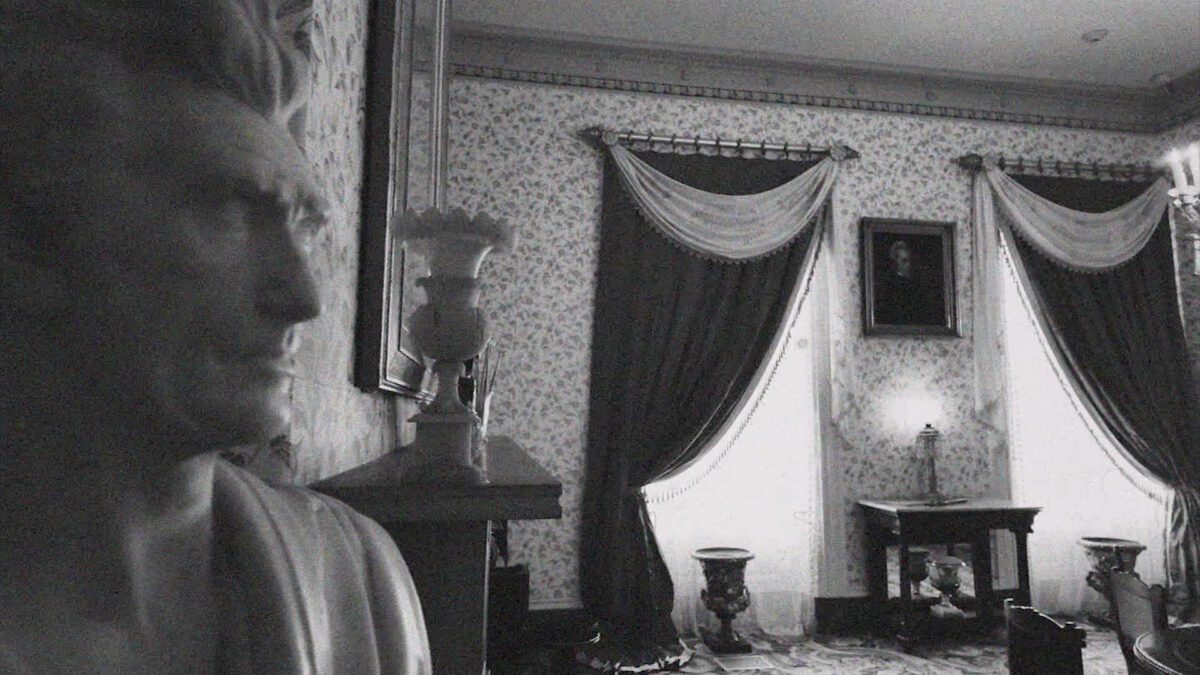
- Well, we are inside the parlors of the Hermitage Mansion, and we're going to talk about our ghost tour program, which is a perennial favorite here at the Hermitage.

- [Miranda] Keith Hardison is the director of interpretations at the Hermitage, the home of General Andrew Jackson. In fact, history tells us Jackson loved his stately home so much he didn't really want to leave and go to the White House when he was elected as the seventh president back in 1828.

- This is as close as you can get to time travel. Experience another world, experience stories that are heroic and tragic, often combined in the same people.

- [Miranda] And the not-so-forgotten tragic tales of the Jackson family are what keep the faithful coming back, especially at this time of the year.

- But even if you've, "I've done ghost tours," not really, because these are new additions, some old favorites, and some things that even we didn't know, but through research have discovered.

- [Miranda] The Jacksons were no strangers to hardship, sorrow, death, and great loss, and many say this house remembers it all.

- [Keith] We have documentation for where these stories come from, and so they are rooted in factual information, and there's still some things that have come to light that, shall we say, have yet to be explained.

- [Miranda] Like the well-documented story of two members of the Ladies' Hermitage Society who spent a not-so-peaceful night at the Hermitage way back in 1893. So Mr. Hardison, we're in the front parlor, so these are the exact rooms where the ladies were when they heard all of the commotion.

- Yes, right here. They had camped out, had a small table, a lantern, chairs, and a mattress. So all was quiet until at midnight, there arose such a clatter. There was the sound as if Jackson on horseback was leading his entire army through the entry hall, and they rushed through that door to find out what was going on, only to have the sound stop and to see nothing.

- [Miranda] Whether tricks of the spirit, or tricks of the mind, this is just one of the many historical and haunted stories you can hear on the hour and a half walking tour. You will start at the welcome center, be guided by lantern through the gardens, and then get a very rare glimpse of the candlelit mansion after dark. When you visit the hermitage during the day, it is interesting, educational, and quite an experience, but when you visit it at night, it is something entirely different. That is when the legends of the dual partners, the haunted love affair, the mysterious illnesses, and sudden deaths all come to life. And trust us, it is an entirely different experience.

- If you've never been to the Hermitage at night, that in and of itself, without the stories, is a totally different vibe. It's a very special experience. But with those stories, it is an unforgettable combination that you don't want to miss.

- [Miranda] And fittingly, the final stop is the final resting place of Andrew Jackson and his beloved wife, Rachel. And some say you might just catch a glimpse of the general making his nightly rounds.

- [Keith] Rachel died in December of 1828, right after he had been notified that he had won the presidency. Jackson, there was not a cemetery here at that point, so Jackson buries her in her favorite place at the plantation, which is her garden. And when Jackson came home from the White House, as long as he physically was able, he would make the short walk out here and talk to her for a while, talking about how he loved her, and telling what had been going on in his day and so forth. His slab is very plain, that it's only General Andrew Jackson, the date of his birth, the date of his death. There is no epitaph because his name speaks for itself.

- [Miranda] So if you're a history buff, or just enjoy the unexplained, join in the Ghost Tours, The Tragedy and Mystery of the Hermitage from mid-September until the end of October.

- [Keith] History doesn't make people, people make history. And we like, we see ourselves in history, but we also see the adventures, the sacrifices, the achievements, the sadness and tragedy, and it's, in a sense, a reflection of us.

- Ghost tours continue at the Hermitage through November 7th, so you've still got time to check it out. Thanks, Miranda. Well, did you know there's a state park near Nashville where you can visit a desert, a tundra, and a cedar glade all in one place? It depends on the time of year you go, but, as John Guider shows us, you can find all of this and a whole lot more at Cedars of Lebanon State Park.

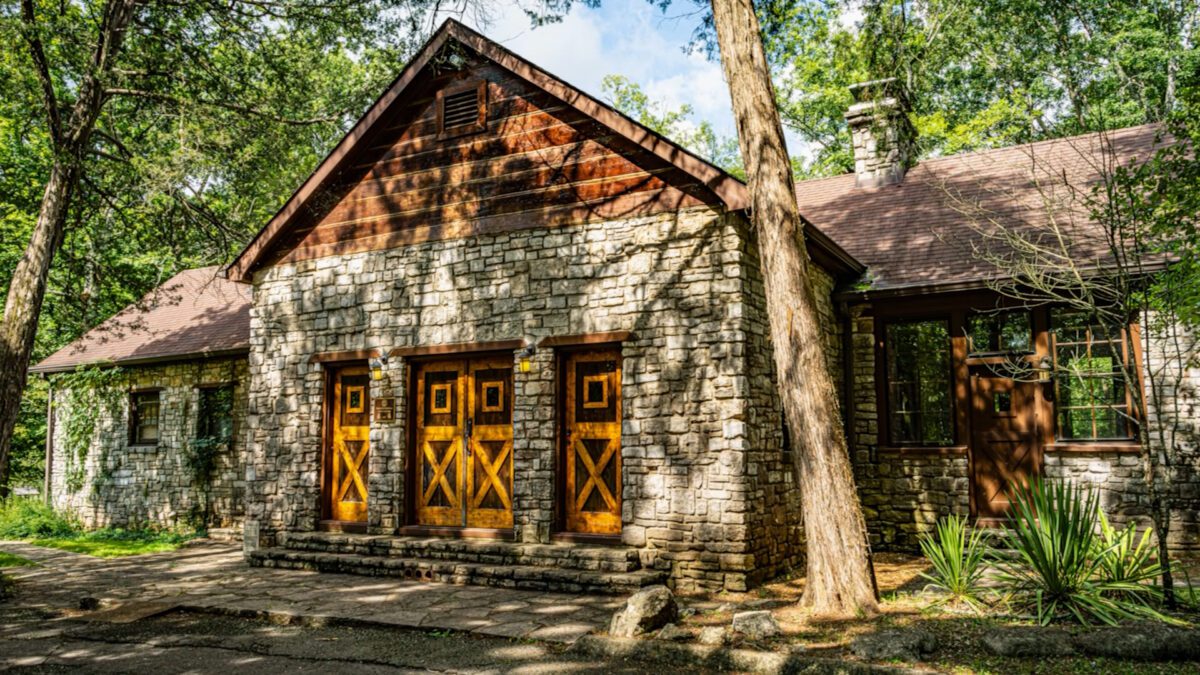
- Here at Cedars of Lebanon, we protect a rare environment called karst topography. This environment is special to the middle Tennessee area. Hi, I'm Jeff Buchanan, I'm the park manager here at Cedars of Lebanon State Park. Karst topography is globally rare anywhere else. It is a environment made up of weak limestone that erodes easily with water. The underground around Cedars of Lebanon in middle Tennessee looks like Swiss cheese, and every once in a while, one of those holes in the Swiss cheese, if you will, collapses, and that makes sinkholes. We have several of those here at the park. We also have that limestone rock close to the surface. It's so close to the surface that it makes a rare environment called a cedar glade. And in a cedar glade, the soil is so thin that it can't support a lot of water in the summertime, and it becomes very dry and arid, almost like a desert. During the wintertime, that same area that's like a desert holds water, and it goes through a freeze thaw cycle that make it similar to a tundra situation. And because of those environmental conditions, rare plants and animals live there that can only survive in those conditions, and that's the environment that we're here to protect. Cedars of Lebanon is important historically because Cedars of Lebanon is a WPA park. The WPA is part of the Roosevelt New Deal program that was started in The Depression. The way the government got this land was that when the settlers first came in here, they tried to farm the land, and those thin soils gave them a hard time. It's hard to grow a crop when you don't have dirt to grow it in, so they switched to livestock, and they found quickly that the livestock deteriorated the land even worse than the crops did. What they did find was that they had these cedar trees out here. Well, they cut all the cedar trees down and sent them into town to be milled and sold back out as lumber until they didn't have any cedar trees left out here. They sat out here and got poorer and poorer until the government came in and offered to buy their farms. And several of the local folks sold their farm to the government and made the land that is now Cedars of Lebanon State Park and Forestry and Natural Area Complex. The federal government bought the land and then hired folks out of Lebanon, and some out of Murfreesboro and surrounding counties, and had them come back in and build the park. A lot of times they built the park out of materials that were left over from all the old homesteads on the area. And from that, we have several cabins here on Cedars of Lebanon State Park, including this one that we're standing in front of, that were built by the WPA in the 1930s. Our most famous building is the Cedar Forest Lodge, which is a prime example of WPA handicraft. We have a lot of local folks that come out to hike and run. We also have families that come out and enjoy the playgrounds. In the summertime, they like to beat the heat in our splash pad. We have a lot of folks that come out to camp, and they enjoy a quiet evening around the campfire at their campsite. We also have people that come out to play Frisbee golf. We have a disc golf course on the park that's very popular. We have a nature center that folks like to come see and take part in our nature programming here on the park. We also have a cave that the more adventurous folks can come out and tour our cave, either with a guided tour or on your own by filling out a permit. We also have 107 site campground. We have nine modern cabins that we rent out to people, and we have a group lodge that sleeps 80 people. We rent the Cedar Forest Lodge and our assembly hall as meeting venues on the park. We support several flowers here that people come to see that are rare, like the leafy prairie clover, and the limestone fame flower, and sunny bells are common here at Cedars of Lebanon and common no place else. We have a satellite operation that we call the Sadie Ford Farm. Sadie Ford Farm was a farm that was functioning at the time that Cedars of Lebanon was built, and we operate it as a working sustenance farm, an example of what the people around this area were doing and how they were living when the park was built. I like the spring at Cedars of Lebanon, mostly because I like the spring wildflowers. I've been with state parks for about 30 years and I like Cedars of Lebanon because it's a local park and the environment that we protect here is very special. Y'all come see us out here at Cedars of Lebanon and we will show you a hiking trail and a glade flower, and we might even put you in one of our cabins or one of our campsites that you can enjoy for as long as you want.

- What a fascinating area. Thanks, John. Well, in our Retro Crossroads segment, this time we revisit a segment from our 13th season. Al Voecks ventured to Christiana, where the old Miller's Grocery had recently undergone a transformation.

- It's always refreshing to know that you don't necessarily have to go to the big city to find a good place to go out and eat and get some good food. But on the other hand, it is somewhat surprising to find one of those places in one of the smallest communities in middle Tennessee. This is Christiana, which is really not one of the major urban areas of Rutherford County, but it is home to Miller's Grocery. Up until about 1995, it was just that, a grocery store. It is now Miller's Grocery, a country cafe. Debbie Barner got involved in all of this a few years ago, realizing there was potential in offering people a good place to eat, yet maintaining a bit of the history of the area.

- [Debbie] Well, we came out to bid on the scales for the Front Porch, which I used to own in town, and heard that someone in the community was going to buy Miller's and tear it down. And I just hate to see historical things torn down. And so my husband was with me, and we talked about it, and said we were going to bid to a certain amount, and if we were supposed to have it, we would have it. And it went at $100 less than what we had said. So we figured we were meant to have it and didn't know what we were going to do with it at the time. As a matter of fact, my husband left for Africa for a mission trip the next day, and I came in the next day and started moving stuff around and looking, and it was in pretty bad shape, so we had to keep it closed up and get some people in to try to fix it up, and that took a little over a year.

- [Al] Everything about Miller's denotes a country home place, the decorations, the music, the atmosphere, the surroundings, and of course, the friendly staff. It's exactly what Debbie had in mind.

- [Debbie] How's lunch? Good?

- Fine.

- How are the potato pancakes?

- Wonderful.

- Do you like them? Good, good. How's your roast?

- That's my favorite.

- I know, because you were real upset when we didn't have it that one time.

- [Al] Did you buy this more of trying to preserve history or saying this is going to be a good business place?

- [Debbie] I think more preserving history, and the business came afterwards. We sold The Front Porch and came out here, and I just planned on doing a little bit of catering and having the grocery store, and little by little, people started hearing about it, and thought it was a really neat place to come just for a sandwich or whatever. And so the groceries started going, and more tables came in, and pretty soon we were a full-blown restaurant.

- [Al] Are you the chief cook and bottle washer?

- [Debbie] No. Used to be. Took on partners about a year ago, and Wally Dudiak does most of the cooking now in the kitchen, and Laura Phillips helps me to bake.

- [Al] Debbie prides herself in good food and good service, but still there are some customers who kind of prefer their own brand of food and service, but Debbie doesn't mind. Opening a restaurant can be a risky business, even in the big cities, where major chains will conduct lengthy studies to make sure there's a decent return on their investment. That fact was not lost on Debbie, and others, when she decided to open Miller's Grocery, a Country cafe, in Christiana, a town of only about 500.

- [Debbie] When the bank gave us the loan, the appraiser came down and said that we would never make it. We would be bankrupt in six months. But I think people, and even myself, look for the quaint little mom and pops shops, because people aren't cooking at home anymore, families, they're not getting good homemade food, and I think that's why we're doing so well, is because you can't get that just any place. I want people to think it's like my home. That's how I treat people when they come in, and that's how I want them to feel, like they're coming to mom's house, or grandma's house, or whatever.

- [Al] As successful as Miller's has been, is there another restaurant in Debbie's future?

- I don't know. Never say never. Right now, I'd say no, but never say never.

- Thanks, Al. And as our crew found out recently, the cafe is still thriving all these years later with a new owner. Well, you can find that story as well as many others on our website, tennesseecrossroads.org, and that'll do it for us this week, but I hope you'll join us again right here next time on "Tennessee Crossroads."

- I'm Nicholas King.

- I'm Leslie King.

- I'm from Nolensville, Tennessee.

- Nashville, Tennessee.

- [Leslie And Nicholas] And happy 40th season, "Tennessee Crossroads."

- [Narrator] Tennessee Crossroads is brought to you in part by.

- [Narrator] With the more than 100,000 tech skill grants that the Tennessee Education Lottery has provided, vocational students in Tennessee wear a lot of different hats, but it all starts with the same one.

- [Narrator] Discover Tennessee Trails & Byways, where adventure, cuisine, and history come together. With 16 scenic driving trails, you can discover why Tennessee sounds perfect. Trips can be planned at tenvacation.com.
Tennessee Crossroads
October 29, 2026
Season 40 | Episode 13
THIS WEEK ON TENNESSEE CROSSROADS, VICKI YATES FINDS HOME COOKING IN INDIAN MOUND. MIRANDA COHEN TAKES US ON THE HUNT FOR GHOSTS AT THE HERMITAGE. JOHN GUIDER VISITS CEDARS OF LEBANON STATE PARK. AND AL VOECKS GIVES US A LOOK BACK INTO THE PAST AT MILLER’S GROCERY.