Episode 4010

Don't have the PBS App? Click Here
Episode Transcript
- [Announcer] "Tennessee Crossroads" is brought to you in part by...

- [Announcer 1] The Tennessee Lottery has proudly provided funding for education programs throughout the state. The Hope Scholarship, as well as technical school grants and more, have received over $8 billion in funding. The Tennessee Lottery, game-changing, life-changing fun.

- [Announcer 2] Discover Tennessee Trails and Byways, where adventure, cuisine, and history come together. With 16 scenic driving trails, you can discover why Tennessee sounds perfect. Trips can be planned at tnvacation.com.

- [Announcer 3] Middle Tennessee State University College of Liberal Arts helps students explore the world, engage minds, enrich lives, and earn a living. More at mtsu.edu/cla.

- This time on "Tennessee Crossroads," we'll head to an eatery that puts the pear in Paris. We'll tell you how you can see music in a cave. We'll visit a place focusing on the history of Franklin, and we'll get the story behind those famous "See Rock City" messages painted on barns. You know the ones. We've all seen them in our travels across the state. Hi, everyone. I'm Ketch Secor, welcoming you to another episode of "Tennessee Crossroads." Well, you know London has Big Ben, and Paris has the Eiffel Tower, but our Paris right here in Tennessee has something just as special, a very unique eatery with a very unique name. Miranda Cohen takes us to Henry County, Tennessee, to visit the Ruby Pear.

- [Miranda] In the heart of downtown Paris, Tennessee, less than half a block from the court square, you will find the perfect spot for lunch.

- [Jill] The name is The Ruby Pear Lunch and More.

- [Miranda] The Ruby Pear is easy to remember, and the food is hard to forget. But where did owners Jill and Cash Caldwell get that catchy name?

- My husband who was helping me had many names, and we didn't agree on anything. And finally, he held up a red pear in the kitchen, and he says, "Something fresh, like the ruby pear." And I just said, "Stop talking," and I started typing.

- Cash Caldwell grew up in Paris, and spent nearly three decades traveling the world with the US Navy, and Jill is from Canada. When they found their way back to Paris, they brought with them a love for fresh, wholesome ingredients from around the globe.

- We've done a lot of traveling in our lives, and I just really wanted something that we can make things every day, keep it fresh, change it up when we needed to. Our menu is seasonal, so we change it four times a year. And we just wanted to be chopping and shopping, and just having a great time with different flavors and creating different dishes.

- [Miranda] Inspired by unique classic creations, the Ruby Pear Lunch and More is known for keeping it simple, fresh, and delicious. A seasonal and ever-changing lunch-only menu is made up of salads, paninis, homemade soups, and desserts. Featuring staples like chicken salad, the pear and fig salad, tomato pie, the pickle club with ham, turkey, bacon, and pickle dip, and a stacked high English roast.

- It's a beautiful roast beef sandwich. It's something that is a little bit different around here. We're in barbecue country, so to be able to put a beautiful roast beef sandwich on there was something I wanted to do. We have our pear and fig panini, which is vegetarian, obviously. It's the combination of the cheese, the arugula, the pear, and the fig spread.

- [Miranda] Every plate is a work of art, packed with flavor and garnished with flair.

- [Jill] All my salads are finished with a sliced pear on top.

- I had the tomato pie with a side salad, homemade raspberry vinegarette that was incredible, but the tomato pie was beyond. I think those were heirloom tomatoes, so they were really good flavor, you know?

- With a keen sense of style, and an eye for detail, Jill has transformed this spot on South Brewer Street into a beautiful eatery, filled with art and exquisite decor, and most of the unique pieces have their own story. When Jill and her husband came upon the unique name, the Ruby Pear, they knew it was perfect for the restaurant. Then she remembered the owner of this antique coffee pot. It was her great-great-grandmother, and her name was, of course, Ruby. A small staff of Jill, Kim, and Mary energetically keep everything running beautifully. And the menu often reflects the calendar, with special creations for holidays, the Kentucky Derby, even mastering the tricky Masters Golf menu.

- I was always about a theme party. It's a good way to break the ice sometimes for people that have little themes. I'll kind of work something in that makes it fun and a little bit of a twist on the daily menu.

- [Miranda] And Caldwell's acute feel for her community has helped her think outside the box, even preparing tasty charcuterie boxes for special events like the Tennessee River Jam. So whether it's ladies who lunch, or men on a mission to find great food, the Ruby Pear Lunch and More is bringing much more to the town of Paris.

- It's just so unique. It's just different from anything we have here in town. I had the berry salad, strawberries and blueberries and raspberries and pear. It was delicious.

- It brings joy to me that people can come and dine here in a simple little building that doesn't really look like a restaurant front. My staff is happy. We're serving fresh, good food. It brings us joy. It's just a wonderful, wonderful place to be.

- Great place. Thanks, Miranda. And you know, I was lucky enough to meet the owner at this year's Tennessee River Jam in Paris. What a lovely person. Hi, Jill! Well, let's move on to one of the coolest music venues in the state, and I mean that literally and figuratively. Because no matter the weather outside, it's always nice and cool in The Caverns. Music is magic to me. I'll experience music viscerally, and that started for me at my mother's station wagon, back when I was a kid in the '70s. It's a weird way that I came to love live music. Little Todd was too young to go see live music in Memphis, Tennessee in 1983, but I would watch on the television, Austin City Limits. And so television and literally PBS, so here I am later, doing a PBS television show from a cave and the 11-year-old is looking at me and saying, "Well done, dude!"

- [Narrator] Todd Mayo left behind jobs in radio and sales to follow a dream based upon his love of music. The cave was the icing on the cake.

- When I walked into this cave in Cumberland Caverns, having never been in a cave in my life in 2008, and I just walked in, I was like, "This is a music venue." And I said to the tour guide, I said, "Do y'all have live music down here?" And she said, "No, but that'd be a good idea." And I said, "I think so too." Then here we are, yada, yada, yada. We've been doing this show on PBS nationwide. It airs in 90-something percent of the country, just like Austin City Limits, and I think we're in season 14 right now.

- [Narrator] Originally in a smaller cave near McMinnville, Bluegrass Underground relocated to The Caverns near Pelham, Tennessee in 2018, and became the Caverns Sessions four years later. The move to the new cave was a challenge, to say the least.

- And we came in, and when we walked in there, where the stage is now, I could touch the ceiling. And so that's a lot of dirt we had to dig out of there. And so, but the gist of it is, it took a lot of -gist. Geologist, hydrologist, archeologist, and biologist.

- [Narrator] You get the gist. It took a lot of experts, and a lot of effort. One thing it didn't take was air-conditioning. As The Cavern's general manager, Joe Lurgio explains.

- I mean, the cave is always humid, which has its benefits. It always feels cool in the summertime. It feels really warm in the wintertime, and it really creates, without any HVAC system, it creates the most perfect heating and cooling system.

- [Narrator] Perfect is right. A constant 59 degrees year-round. And for those of you worried about millions of tons of rock over your head, Joe puts your mind at ease.

- Everybody who comes here asks, "Is the cave safe?" Every 10 feet in this cave, you can't see them with your eye, but there's pins that secure the rock walls of this cave from the layer of rock you see, into the next layer of rock behind them. So I like to say that it's probably the safest cave in the world to be in, at any given time.

- [Narrator] The only time safety was a factor was during COVID. As you can see, social distancing is not something caves are known for, so Todd had to do a pandemic pivot.

- During the heart of the pandemic, in about six weeks, we moved 500 truckloads of dirt, felled trees, moved giant rocks. We built an amphitheater, and it allowed us to do social distancing, sort of re-imagining the concert where it was like a restaurant, and you show up and there's your pod, and there's your beer and there's your merch. It was all great. Everybody's got elbow room. And so then when we sort of got through the heart of the COVIDs, we realized, "Wow, we've got a 6,000 capacity amphitheater, as well as a magic cave." And I never dreamed of that. I was happy to have a magic cave!

- [Narrator] But Todd, being Todd, couldn't stop there.

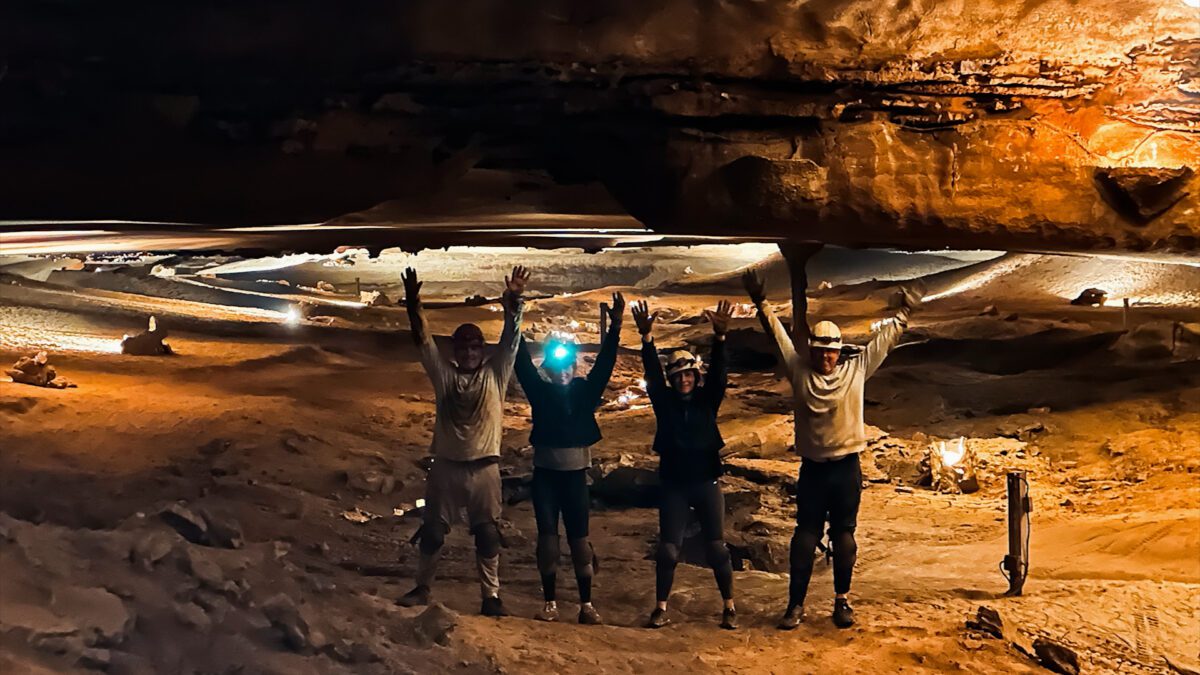
- [Todd] And then we said, "Well, if we're going to do that, let's make a campground, and then let's do some music festivals. Let's do Cave Fest. Let's build yurts." So now you've got a music cave here, and we do adventure tours back past that.

- But then you can go even deeper and we provide hard hats and headlamps and see some parts of the cave that not many people have ever seen before.

- [Narrator] Of course, most folks don't come to The Caverns for subterranean tours, but a different type of exploration. One of music, and all of its wonders.

- There's a very long list of artists that just sort of take my breath away, that we've had the opportunity to hear. And besides the music and the artistry itself, is 73% of our patrons for The Caverns year over year come from outside the state of Tennessee. The joy of seeing people come from the world over, the country over, and all across Tennessee, and experience what they have here, it just does my heart proud. We partnered with the Cherokee Nation because this is Cherokee country to have a phrase that stands for what I believe burned into them doors, and it says, "Welcome to The Caverns, where the great spirit brings all people together, through music."

- Well, live in The Caverns, one of my most favorite places to play, and a wonderful place to see a show, or just take a tour. Well, our next story is a perfect mix of old and new. Downtown Franklin has a history and culture center that's focused on telling the stories of the surrounding area. And while you may be tempted to call it a museum, it's so much more.

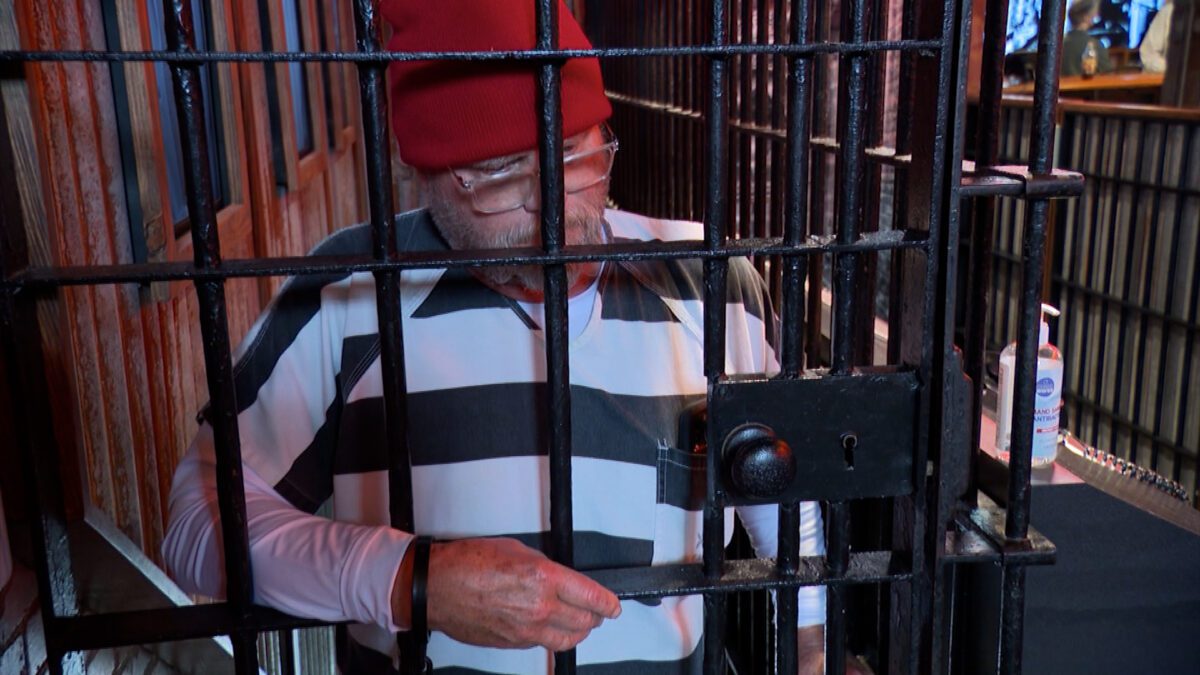
- [Laura] It's an historic building that dates back to 1905, and it sits just off the square in downtown Franklin. This is the old, old, old jail of Williamson County. Of course, it doesn't house prisoners anymore, but it does hold their stories, and the stories of many others too.

- This is the original 1905 Williamson County Jail. All the original brick you can see around you is original to the building. The room we're sitting in right now was part of the sheriff's residence that at the early 20th century, the sheriff actually lived with his family in the county jail. So we know that their living quarters were the front part of this building, the downstairs and upstairs parts. And then the jail cells were all in the back.

- [Laura] Talk about keeping your eye on the prisoners. Historian Nat Taylor is the Managing Director of the Moore-Morris History and Culture Center of Williamson County.

- Built in 1905, activated as the county jail right around then, and then this front part added on just a couple years later for the sheriff's residence. And it was used as the county jail until the late 1930s when the building right next door where the Heritage Foundation, the Williamson County's headquarters are currently located. That was the old, old jail, and this is the old, old, old jail.

- [Laura] So it's got three "olds."

- Exactly.

- [Laura] Thanks to the Heritage Foundation of Williamson County and lots of donors, this is 6,000 square feet of state-of-the-art interactive exhibit space dedicated to telling the story of Williamson County and Franklin. Franklin native David Garrett is Board Chair for the Heritage Foundation.

- It's a place where history really does come to life. Because one thing we wanted was it to be cutting-edge technology, because people today respond to museums differently. And so when you come in here, it's sort of like a "Harry Potter" movie. The portraits talk to you, holograms come up, but we wanted to take in all the history of the middle Tennessee area, not just Civil War, because a lot of places address Civil War. We touch on it here, but we go from Indigenous people to the present day.

- Layered maps explain how White settlers transformed the landscape before the Civil War. A diorama describes Tennessee's first railroad in Williamson County, and stories of the Franklin Theater, Gray Drug Store, and the old Walter Pyle Hospital come to life, literally. Tyrus Sturgis, Chief Officer of Engagement for the Heritage Foundation is about to show me how. So Tyrus, would you say that the technology is one of the most unique things about this center?

- It's one of the things that make this place so special. One example is our living portraits, which are motion activated. Take a few steps forward and see what happens.

- Okay, here we go. This is Calvin LeHew, one of the founding preservationists of Franklin.

- My name is Calvin LeHew, and I was born above by country store out in Leiper's Fork.

- History very much matters. This is a town that is all about place-making, about historic preservation, about history.

- [Laura] Bari Beasley is President and CEO of the Heritage Foundation of Williamson County.

- You come in and you kinda think and feel you're in a museum, but it is a living, breathing history and culture center. So not only can visitors come in and experience everything in every room and all of the interesting technology and talk to the jailbirds in one of the places and go in the experience room and so many interesting things. And then there's a whole another side of the business here in that in addition to it being a history and culture center, we've created every room and every exhibit has been built where it can be turnkey and it can turn into event space. We want people to build their memories here.

- [Laura] You can actually record your own personal history up in the Storyteller's Lab on the third floor, or maybe you'll get lucky to get a root beer float when visiting. But the exhibit that everyone talks about is the Immersive Experience Room. The Culture Center sits on the land where White's Tavern used to be, and Benjamin White even appears to tell his story, all taken from historical records, and there's more.

- I'm always really moved by Freeman Thomas's portrait in the Experience Room. My research wheelhouse is the Reconstruction era, and his story is really compelling. He was enslaved here in Franklin, and he talks about when the Union Army first took over Nashville, just kind of how excited they got and they ran to the Union troops for their freedom and then went to work for them, helping build forts in the area, and then enlisted as soon as they allowed the African Americans to join the Union Army. He signed up on day one. His narrative is just so moving where he talks about just what an experience that was for him, and the doors that he saw were going to open for him and his brand new life.

- [Laura] It's a new way to teach history, this blend of old and new.

- I think it's a great way to really understand the heart and soul of the community, because that's really what you get from, it's not just history that's stagnant, it's why this community is the way it is.

- [Bari] I hope that visitors come to this town or locals come here and they spill back onto Main Street and particularly visitors and they have lunch somewhere and they say, "I didn't know what it..." Fill in the blank, whatever it might be. I hope it is a place that is inspiring, and I hope it's a place that people want to replicate. There's just nothing like it when you're in a historic building. And so that's what we do every day at the Heritage Foundation. Our whole mission is about saving places and stories that matter.

- Wow, so much history all in one place. Thanks, Laura. Well, finally, in our Retro Crossroads segment, what do you remember from your childhood family vacations? Is it eight people crammed into the family station wagon? I bet you remember passing a barn or two with "See Rock City" painted on the roof. Well, back in 1996, Rob Wilds caught up with a man whose mission was to make sure those original barn messages lasted for another generation.

- Back before the interstates were built, if you wanted to travel long distances, you had to take some back roads, got to see a lot of the countryside and a lot of the towns that way too. But since you weren't traveling on interstates, you didn't have a big huge sign every half mile, telling you where to get off and what to see. But you didn't really have to worry either, because if you traveled in the Midwest or the South, there were constant reminders of just where your vacation ought to end up. Milton Simpson has lived with a Rock City barn since he was a kid.

- I think it was sometime in the 1940, or whenever they started painting, we were one of the first ones.

- [Rob] And his wife, Jane, has come to expect visitors who want a close look at their bill barn.

- It seems like the last couple of years that everybody has been talking about the Rock City signs. And we've had several, many people to stop by, and want to take a picture of it.

- [Rob] What does a farmer get out of it anyway?

- [Milton] That's it. Maintenance on that and $5 a year for rent.

- [Rob] Of course, it's not the $5. It's that paint job that concerns Jerry Cannon. Over the years, the Rock City Barns had, well, they had deteriorated, some virtually disappearing. Then in 1992, the Rock City folks decided to bring them back, repaint them, and they needed a painter. And artist Jerry Cannon went from working on canvas to working on shingle.

- [Jerry] 'Cause see, I didn't even really know what a Rock City Barn was until I moved to the country, and me and I'm 36. And then there was one close to my house up there and I knew it was in bad shape, and so I just called them up one day and asked them did they need the barn painted, and went up and talked with them. I've been painting them ever since. Make sure she's good and steady.

- [Rob] The ladder and the barn, because Jerry's been on some barns that really needed a carpenter more than a painter.

- [Jerry] I have been on them when they're so thin that you could just about fall through it. And you have to walk very carefully. This one actually is a pretty good barn here.

- [Rob] Yes, the Simpsons take good care of their barn, and Jerry's found that most of the folks who own Rock City Barns are very proud of having a cultural icon on the property, and were glad to see Jerry coming.

- People were real excited about coming around and redoing them. They were just tickled. It really tickled some of them. They were just thrilled that I got around and got them repainted, just to see them repainted again, because a lot of them were older folk. I have met some of them and been back, and they had then passed on.

- [Rob] People may have passed, but the barns remained, and became works of art. Yes, with their own book and pictures, highlighting the slogans and the places and the creativity of the man who first painted them, Clark Byers, who began his career in the '40s, and continued painting for three decades. He's still around and gave the current barn painter, Jerry Cannon, some good advice.

- [Jerry] He did tell me that. They did tell me that, "Don't fall." And I guess I've been lucky or fortunate for one of those two things, because I haven't fell yet. I've slipped once.

- [Rob] You've never fallen off one of these barns?

- I've slipped one time and I slid all the way to the edge, and I finally caught myself before I went overboard.

- [Rob] Wow.

- And that was a little scary because if I'd hit the ground, it was about 10 foot, and then plus there were a bunch of rocks and stuff down there. So it has its hazards. Oops. Sometimes you have to move pretty fast getting up to the top. Sometimes it's slippery.

- [Rob] Hazards like steep roofs and hot days.

- [Jerry] I try to do a little more in the fall. It's kind of hard on me because it's seasonal, and then when it rains, you can't work. And then the winter, you can't work, so you really have to kind of depend on the weather. Weather plays a very important part on this job.

- [Rob] Aside from the heat and the steep roofs, and the weather, there's loneliness, working high on a perch with only a bucket, a brush, and a song for companionship. And of course, there's always the hazard that everybody who's ever painted anything has encountered.

- [Jerry] Well, that's mistake number one today.

- [Rob] But the frustrations are worth it.

- When I first start like this here, it seems so slow, and it seems like you're never going to finish. But when you actually get through, it's a pretty good feeling at the end, because you can look back on it and see you really accomplished something. I guess I kind of like that part about it.

- [Rob] So Jerry Cannon plans to continue to be the Rock City man, traveling across the south, restoring barns and memories for as long as he can.

- [Jerry] I'd say some of these old barns are probably going to outlast us all.

- [Rob] Yeah.

- [Jerry] Because they've sure been around. They sure been around a while. And I'll plan on doing it until I can't go, I suppose, I guess you would say.

- [Rob] After all, for an artist, this job is perfect. I mean, more people as they traveled these roads, have probably seen Jerry's work than have viewed those somewhat less practical masterpieces housed not on barns, but in museums.

- Wow, I always wondered about those. Thanks, Rob! Well, that's all the time we have for this show, but check out our website at tennesseecrossroads.org, and while you're there, don't forget to leave us a video message. For our 40th anniversary, we want to see you on the show. Well, thanks for coming along. Tune in next week. See y'all then.

- I'm Dr. LaDonna Boyd, and I want to say happy 40th anniversary to "Tennessee Crossroads." That's such an amazing milestone. Congratulations.

- Hey, everybody, I'm Terry McBride. And I want to say happy 40th anniversary to "Tennessee Crossroads."

- [Announcer] "Tennessee Crossroads" is brought to you in part by -

- [Announcer 1] With the more than 100,000 tech skill grants that the Tennessee Education Lottery has provided, vocational students in Tennessee wear a lot of different hats, but it all starts with the same one.

- [Announcer 2] Discover Tennessee Trails and Byways, where adventure, cuisine, and history come together. With 16 scenic driving trails, you can discover why Tennessee sounds perfect. Trips can be planned at tnvacation.com.
Tennessee Crossroads
October 08, 2026
Season 40 | Episode 10
THIS TIME ON TENNESSEE CROSSROADS, WE’LL HEAD TO AN EATERY THAT PUTS THE “PEAR” IN PARIS. WE’LL TELL YOU HOW YOU CAN SEE MUSIC IN A CAVE. WE’LL VISIT A PLACE FOCUSING ON THE HISTORY OF FRANKLIN, AND WE’LL GET THE STORY BEHIND THOSE FAMOUS “SEE ROCK CITY” MESSAGES PAINTED ON BARNS.